
Ophthalmology丨Innovative Implantable Ocular neuromuscular Stimulator Developed by Dr. Lejin Wang’s Team Secures Marketing Approval
王乐今团队创新研发“植入式眼部肌肉神经刺激器”获批上市
2026-03-24
The i-NYS Implantable Ocular neuromuscular Stimulator — an innovative device developed over more than 20 years by the team led by Dr. Lejin Wang, Chief Physician of the Ophthalmology Department at Peking University People’s Hospital — has received marketing approval from China's National Medical Products Administration (NMPA).
As the world’s first therapeutic device for congenital nystagmus (CN), it marks the first-ever application of implantable neuromuscular stimulation in this field, delivering a groundbreaking China-originated therapy that targets the root cause of the condition.
Congenital Nystagmus (CN) is a congenital inherited ophthalmic disorder with onset typically at birth or within the first 6 months of life, which persists for the entirety of patients’ lifetimes. Its classic clinical manifestation is involuntary, rhythmic, reciprocal oscillatory movements or jerks of both eyes, as if a permanent “vibration mode” is activated. The condition severely impairs patients’ visual quality and facial appearance, and creates substantial barriers to their education, employment, and social interactions. For decades, CN has been regarded as an “incurable condition” in ophthalmology, as clinical practice lacked effective treatments targeting its underlying etiology.
Against the long-standing global medical challenge of congenital nystagmus (CN), Dr. Lejin Wang led his team to break through technical hurdles, finally delivering the i-NYS Implantable Ocular neuromuscular Stimulator — a tiny device no much bigger than a thumbnail.
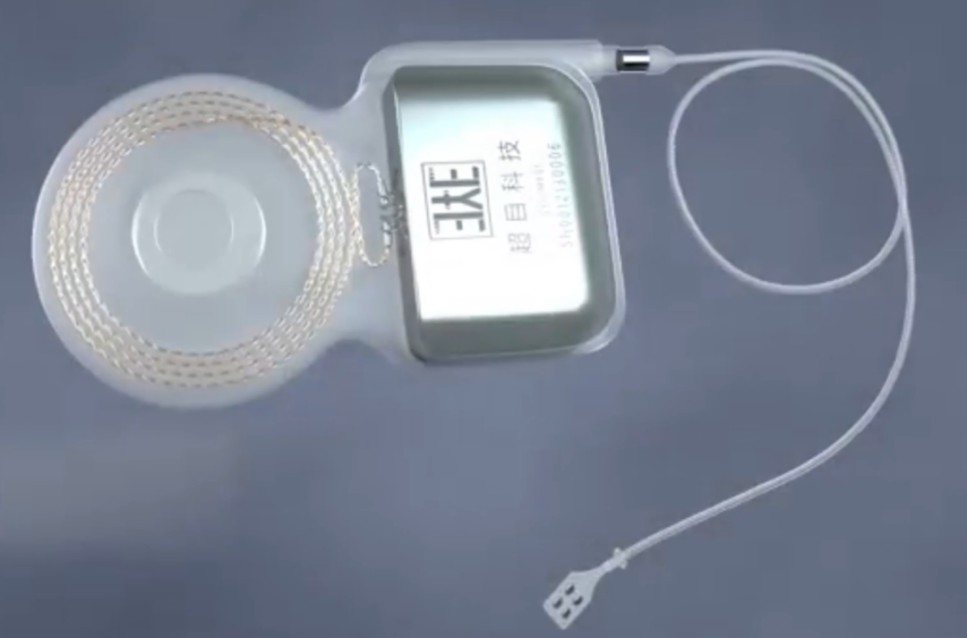
The i-NYS is delivered via a minimally invasive procedure, with its pulse generator implanted at the squamous part of the temporal bone behind the patient’s ear. It precisely modulates hyperexcitable ocular motor nerves, suppressing or eliminating nystagmus-causing nerve impulses at their source.
The safety and efficacy of the novel therapy were validated in a completed clinical trial, which enrolled 71 patients (26 children and 45 adults). Key findings are as follows:
- 587% increase in Foveal Fixation Time (FT): This indicates a fundamental improvement in patients’ ability to maintain stable target fixation and visual quality, a metric never achieved with conventional surgery.
- 65.4% increase in Nystagmus Acuity Function Score (NAFX): This reflects a marked reduction in the impact of nystagmus on visual function.
- 84.1% decrease in Nystagmus Amplitude (NA) and 79.4% decrease in Nystagmus Frequency (NF): These findings demonstrate effective suppression of nystagmus itself, rather than mere symptomatic compensation.
- 36.1% of participants (over one-third) achieved improvement in Best Corrected Visual Acuity (BCVA).
- No procedure-related adverse events were reported in any of the 71 subjects.
Clinical trial data confirm that the i-NYS is both safe and effective, and fundamentally transforms the treatment outcomes for congenital nystagmus. The approval of the i-NYS not only fills a critical gap in the global market, but also represents a landmark original breakthrough for China in the field of ophthalmic medical devices.
